If your dryer runs but the clothes stay wet, the drum is turning and the heat is not doing its job. Most of the time the cause is one of a few parts, and the first one is not a part at all. It is the vent.
Safety first. Unplug the dryer before you look inside it. For a gas dryer, shut off the gas valve too. If you smell gas, leave the house and call the gas company.
How a meter test finds the bad part
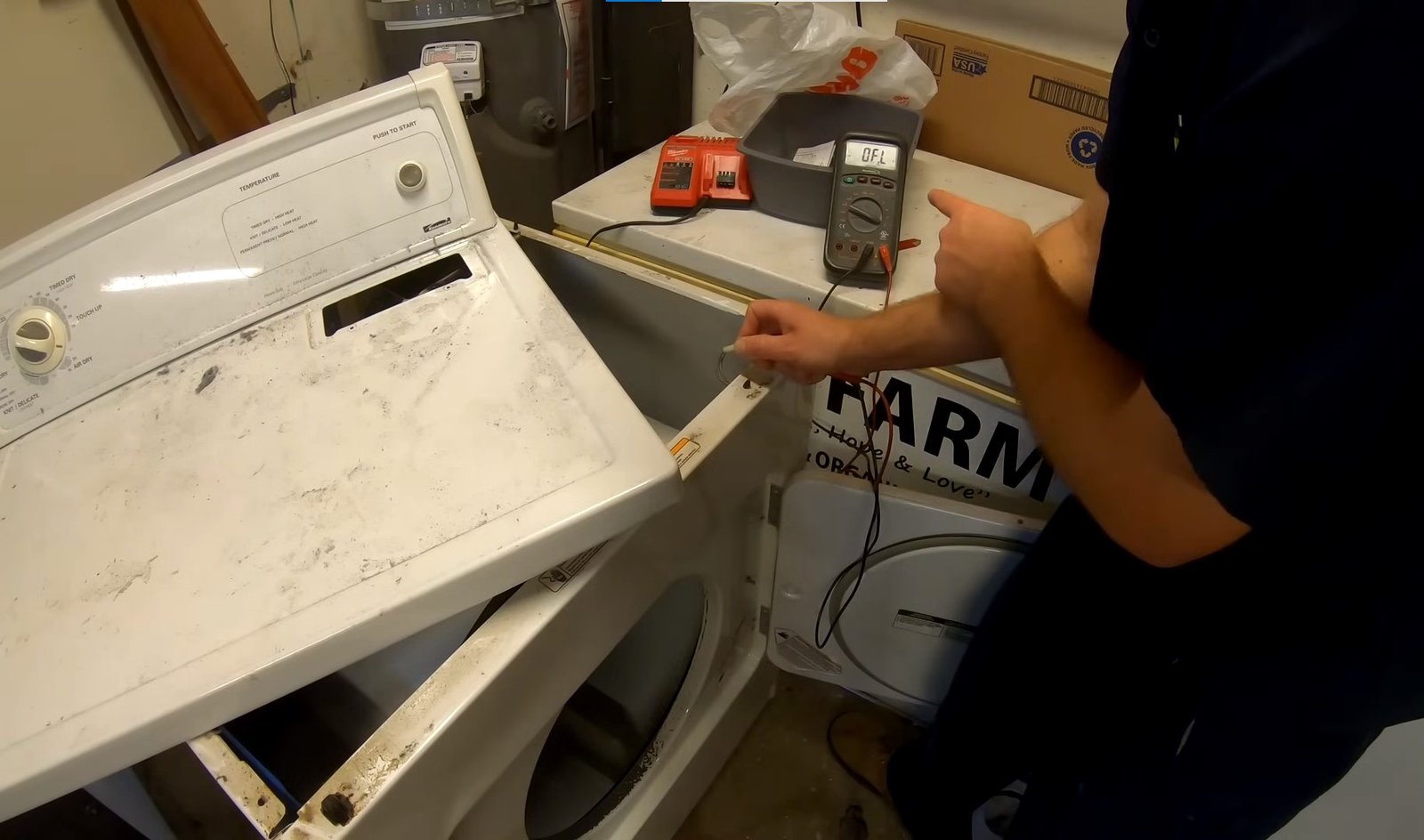
A dryer that runs but does not heat has a break somewhere in the heating circuit. We do not guess. With the power off and the dryer unplugged, we use a multimeter to check each part one at a time. The meter shows whether electricity can pass through the part. This is called a continuity test.
If the meter shows OL, it means an open circuit, so no current passes through that part. A working fuse or heating coil should let current pass. A part that reads OL is a good suspect, but we also check the wiring and the vent before we say it is the cause.
- Thermal fuse. A small safety part. It blows when the dryer overheats, and often because the vent is blocked. It cannot be reset, so it must be replaced.
- Heating element (electric dryers). A coil of wire that makes the heat. It can break or burn out with age.
- High-limit thermostat and cycling thermostat. They switch the heat off and on to keep the dryer from overheating.
- Gas valve coils and igniter (gas dryers). They open the gas and light the burner. A weak igniter is a common reason for no heat.
[Provider to confirm: which of these parts the technician replaces on the first visit, and which are ordered in.]
Why lint buildup causes heat problems
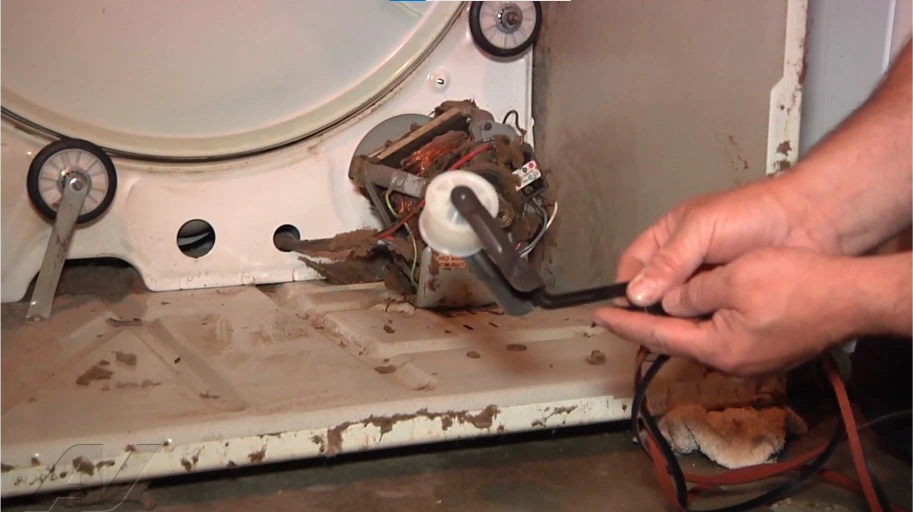
This is the back of a dryer with the panel off. The motor sits in the middle, and the idler pulley and rollers are on the left. Lint has packed around the motor and the floor of the cabinet. Lint like this traps heat, can blow the thermal fuse, and is a fire risk. It often builds up when the vent is blocked or the lint trap is not cleaned.
Never open a plugged-in dryer. If you want to look inside, unplug it first. If you see lint like this, stop using the dryer and call us. We clean the area, check the vent and test the parts before the dryer is used again.
Check these first, in this order
- Lint trap. Pull it out and clean it. Wash the screen with warm water and dish soap if it looks dull or coated, because a film can block air even when it looks clean.
- Vent hose and outside vent. Pull the dryer out. Look for a crushed, kinked or lint-packed hose. Check that the flap outside opens when the dryer runs.
- Breaker. An electric dryer uses a double breaker. One half can trip and the drum will still turn but there will be no heat. Switch both halves off, then on.
- Gas supply. On a gas dryer, check that the gas valve is open.
Parts that usually fail when there is no heat
If the checks above are fine, these are the usual suspects. A technician tests each one with a meter before replacing anything.
- Thermal fuse or thermal cutoff. A safety part that stops the heat when the dryer overheats. It often fails after a blocked vent.
- Heating element on an electric dryer.
- Igniter and gas valve coils on a gas dryer.
- Thermostats that switch the heat on and off.
A failed thermal fuse is a warning. Something made the dryer overheat. Fix the vent as well as the part, or the new part can fail again.
When to stop and call
- The dryer is very hot to the touch or you smell burning.
- The vent was badly blocked. Do not run another load until it is clear.
- You are not comfortable opening the dryer or using a meter.
You can read more in the warning signs and fire safety guide. For parts and manuals, see Kenmore dryer manuals, parts and DIY help.
Questions people ask
Why does my dryer run but not heat?
The drum motor and the heat run on separate parts. A dryer can spin with no heat when the vent is blocked, a breaker half has tripped, or a heating part has failed.
Is a thermal fuse a safe repair to do myself?
It is a safety part, so the cause of the overheating must be found first. If you are unsure, call a technician. [Provider to confirm the visit details]
How long should a load take to dry?
It depends on the load and the dryer. If a normal load needs two or three cycles, check the vent first.
Dryer not heating? Call us.
Call and tell us what the dryer is doing.